
Advanced Treatment Technologies · Singapore and Southeast Asia
Ultra Pure Water (UPW) Systems for Semiconductor Manufacturing
World Technologies designs, supplies, commissions and supports ultra pure water treatment systems for wafer fabrication, electronics and other high-purity processes. Each treatment train is engineered around the incoming water, point-of-use specification, plant demand and operating risks.
Discuss your UPW requirement →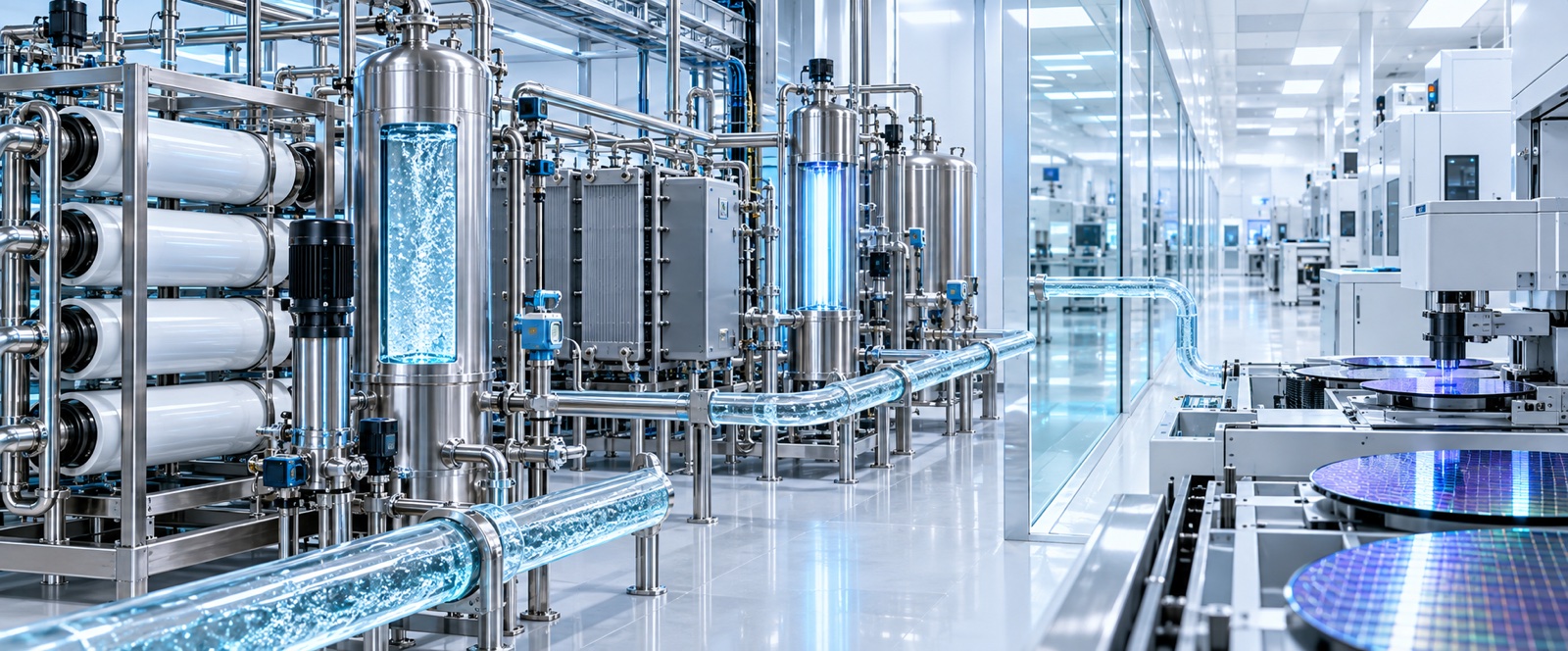
Treatment train
How an ultra pure water system works
A semiconductor UPW system is a sequence of barriers—not one filter. The equipment and order are confirmed from feedwater analysis and the facility's required water quality.
- 01
Feedwater assessment and pretreatment
Characterise the feed and apply multimedia filtration and activated carbon where needed to manage suspended solids, oxidants and organics.
- 02
Ultrafiltration (UF)
UF reduces fine particles and colloids before reverse osmosis, helping protect downstream membranes and stabilise feed quality.
- 03
Reverse osmosis (RO)
RO removes much of the dissolved salt load. A second RO pass may be selected when the polishing target and feed conditions require it.
- 04
Electrodeionization (EDI/CEDI)
EDI provides continuous ionic polishing after RO, reducing the load on final polishing equipment.
- 05
Final polishing
As specified, mixed-bed units, degasification, UV/TOC control and final filtration address residual ions, gases, organics and particles.
- 06
High-purity distribution
Engineered storage, recirculation and distribution deliver the required quality to points of use with monitoring along the loop.
Design criteria
Water quality is specified at the point of use
High-purity water for semiconductor processes is evaluated by more than dissolved ions. World Technologies considers resistivity or conductivity, silica, total organic carbon (TOC), particles and other contaminants relevant to the process. Online instruments and sampling points are selected to verify performance and support reliable operation.
Technical reference: 18.2 MΩ·cm resistivity at 25 °C is the theoretical limit for pure water, approximately 0.055 µS/cm conductivity. It is a reference value, not a guaranteed output for every plant; agreed specifications depend on the process and operating conditions.
Engineering and lifecycle support
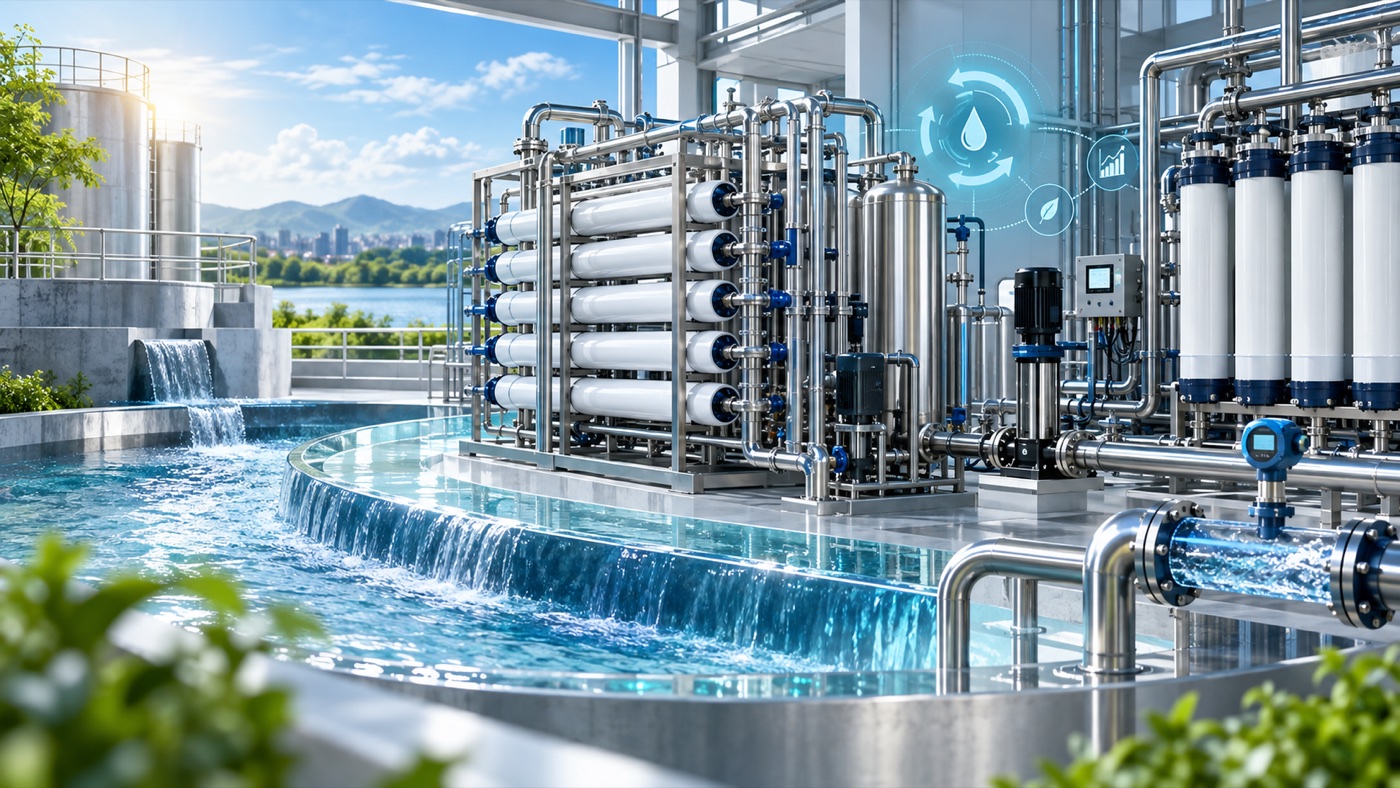
How World Technologies delivers UPW systems
Assess
Review feedwater analysis, flow demand, production risks and the required point-of-use quality.
Design
Size pretreatment, RO, EDI, polishing, instrumentation and distribution for the site.
Commission
Integrate equipment and controls, verify operation and train the plant team.
Support
Provide monitoring, preventive maintenance, membrane cleaning and performance upgrades.
Frequently asked questions
Ultra pure water system FAQs
What is ultra pure water (UPW)?
UPW is water treated to very low levels of dissolved ions and other contaminants for sensitive manufacturing processes. The required specification depends on the point of use.
Does every UPW system need double-pass RO?
No. One or two RO passes are selected from feedwater quality, the downstream polishing train and the required output—not from a fixed standard design.
Is 18.2 MΩ·cm guaranteed throughout the distribution loop?
No. That figure is a theoretical reference at 25 °C. Actual acceptance criteria, monitoring locations and operating limits must be defined for the facility.
Can RO reject and other water streams be reused?
Potentially. Recovery opportunities depend on stream quality, treatment economics and the intended reuse. World Technologies can assess RO reject recovery and other water-recycling options separately from the UPW supply train.