
Industrial Wastewater Treatment
Effluent Treatment Plant (ETP) Solutions
Design and upgrade industrial effluent treatment plants in Singapore for reliable compliance, wastewater recycling, lower discharge and efficient operation.
Discuss Your Requirement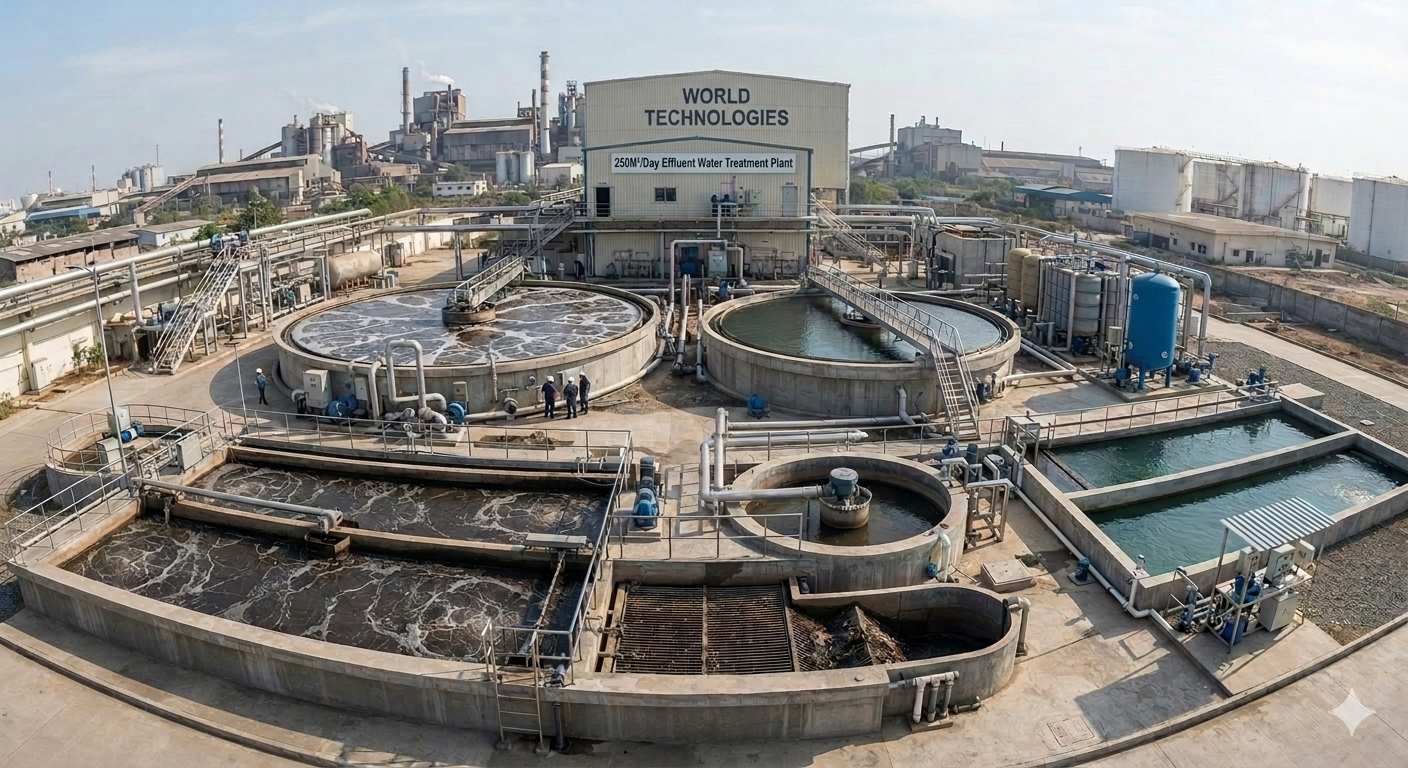
Industrial Effluent Treatment Plants (ETP)
An Effluent Treatment Plant (ETP) is an industrial waste treatment system designed to purify contaminated wastewater before it is released back into the environment or reused in production. It removes toxic chemicals, organic matter, heavy metals, and suspended solids from industrial runoff.
Industries like textiles, pharmaceuticals, chemicals, and food processing rely heavily on ETPs to comply with environmental laws and prevent natural water pollution.
- The Industrial effluent collected in an Equalization Tank in order to dampen the variation in flow rate and pollutant concentration. Mixing in the Equalization Tank will be provided by coarse bubble diffused aeration. From the Equalization Tank, the equalized sewage will be pumped via feed pumps into Aerobic biological reactors (Aeration Tanks).
- The Aeration Tank MLSS considered for design is 3500 – 4,000 mg/l. Air will be provided by fine bubble diffused aeration. Compressed air will be provided by the Air Blowers. WTPL proposes an extended aeration process. The aeration tank will have a low F/M ratio (0.1 kg BOD / kg MLSS-day) and a high Solids Retention Time. This will encourage endogenous respiration and reduce the sludge yield as well as increase the process stability.
- Mixed liquor from each Aeration Tank will flow by gravity into the Lamella Clarifier Tank where the mixed liquor suspended solids (MLSS) will be settled. Settled sludge from the bottom of the Lamella Clarifier will be recycled back to Aeration Tank in order to maintain the desired MLSS and excess sludge will be wasted to aerobic sludge digester cum thickener. The Scum from the top of Lamella Clarifier is also fed to excess sludge wasting line.
Understanding Effluent Treatment Plants
An Effluent Treatment Plant (ETP) is a specialized industrial wastewater treatment system. Its primary purpose is to treat highly contaminated industrial wastewater known as effluent before it is safely discharged into the environment or recycled back into factory operations.
Without proper treatment, industrial waste introduces hazardous chemicals, heavy metals, and toxic materials into local water bodies, destroying aquatic ecosystems and risking public health. Implementing an advanced ETP is essential for compliance with environmental regulations and promoting industrial sustainability.
Why Industrial Effluent Treatment is Essential
Industries generate massive amounts of wastewater containing diverse pollutants. An ETP acts as a defense mechanism that cleans this water, offering several critical benefits:
- Environmental Protection: Prevents toxic chemicals from polluting rivers, lakes, and soil.
- Legal Compliance: Helps businesses follow strict government environmental laws and avoid heavy penalties.
- Water Conservation: Enables factories to recycle treated water, cutting down freshwater consumption and lowering operational costs.
- Public Health Safety: Eliminates pathogens and dangerous toxins that can seep into drinking water supplies.
How Does an ETP Work? The 4 Key Stages:
An efficient effluent treatment plant utilizes a combination of physical, chemical, and biological processes. The treatment process is generally broken down into four distinct stages:
1. Preliminary Treatment
The first stage focuses on removing large, solid physical objects from the wastewater.
- Screening: Catches large debris like wood, plastic, rags, and solid waste.
- Grit Removal: Allows heavy inorganic particles like sand and gravel to settle.
- Oil and Grease Trap: Skims floating oils and grease off the surface of the water.
2. Primary Treatment
This stage removes smaller suspended solids and organic matter using physical and chemical methods.
- Sedimentation: Wastewater sits in a primary clarifier where heavy solid particles sink to the bottom as sludge.
- Flocculation and Coagulation: Specific chemicals are added to force tiny, microscopic particles to clump together into larger particles (flocs) so they can be easily filtered out.
3. Secondary (Biological) Treatment
This stage targets dissolved organic matter that survived the primary stage. It relies on living microorganisms to clean the water.
- Aeration: Oxygen is continuously pumped into the wastewater to encourage aerobic bacteria to grow.
- Biodegradation: The bacteria consume and break down the harmful organic pollutants, transforming them into harmless byproducts.
4. Tertiary (Advanced) Treatment
The final polishing stage elevates the water quality to meet strict regulatory discharge limits or recycling standards.
- Advanced Filtration: Water passes through carbon and sand filters to remove remaining trace particles, odors, and colors.
- Disinfection: Chlorination, ozone treatment, or Ultraviolet (UV) light irradiation kills any remaining harmful bacteria or pathogens before the water leaves the plant.
Key Industries That Require an ETP
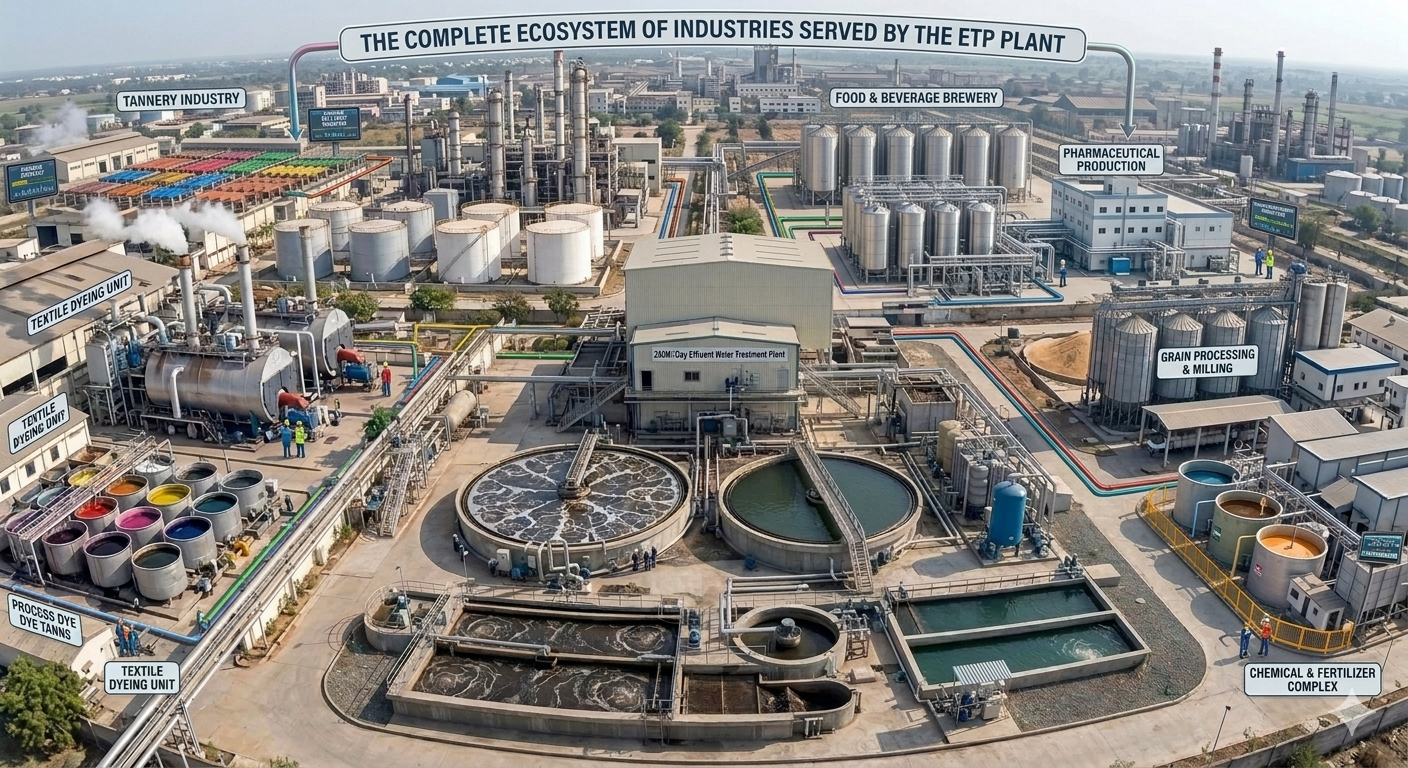
Any manufacturing or processing facility that generates wastewater needs an ETP. The most common industries include:
- Chemical Manufacturing: Neutralizes highly acidic, alkaline, or toxic chemical waste.
- Pharmaceuticals: Eliminates active chemical ingredients, antibiotics, and complex organic compounds.
- Food and Beverage: Treats high levels of organic waste, suspended solids, sugars, and greases
- Textile and Garments: Manages heavy dyes, chemical compounds, and bleaching agents.
- Tanneries and Leather: Removes heavy chromium, sulphides, and organic nitrogen.
Comprehensive ETP Solutions by World Technologies
At World Technologies, we engineering, optimize, and maintain high-efficiency Effluent Treatment Plants (ETP) and custom industrial setups. We serve as a single-window partner for diverse sectors including textiles, pharmaceuticals, tanneries, chemical complexes, and food processing plants.
Our complete lifecycle services ensure your facility stays 100% compliant with environmental mandates while drastically reducing daily operational overheads.
End-to-End ETP Engineering & Commissioning
We turn complex environmental requirements into high-performing infrastructure.
- Custom Plant Design: Tailored layouts designed around your specific space constraints, daily discharge chemistry, and local regulatory limits.
- Turnkey Installation: Complete civil, mechanical, and electrical installation of clarification tanks, aeration systems, and advanced filtration units.
- System Integration: Seamless plumbing, piping, and electrical automation that connects your production line directly to the ETP facility.
2. Advanced Upgrades & Retrofitting
Maximize the ROI of your legacy infrastructure without rebuilding from scratch.
- Capacity Expansion: Upgrading older systems to handle higher volumetric flows, such as scaling up to a seamless 250M³/Day threshold.
- Process Conversion: Retrofitting traditional systems with Membrane Bioreactors (MBR) or Moving Bed Biofilm Reactors (MBBR) for better space utilization.
- Automation Overhauls: Integrating PLC-based control panels and digital sensors to eliminate manual monitoring errors.
3. Operations & Maintenance (O&M) Contracts
Leave the day-to-day management to environmental engineers so your team can focus on production.
- Preventative Maintenance: Regular inspections of pumps, blowers, diffusers, and chemical dosing systems to completely eliminate unplanned downtime.
- Biological Culture Management: Monitoring, nurturing, and replenishing optimal bacterial strains in aeration tanks for peak organic degradation.
- Sludge Management: Cost-effective dewatering, handling, and legally compliant disposal protocols for generated primary and biological sludge.
4. Chemical Optimization & Supply
The right chemistry saves millions in operational costs. We provide and fine-tune your chemical recipes.
- Coagulants & Flocculants: High-grade polymer supplies engineered to settle suspended solids rapidly.
- pH Neutralizers: Auto-dosing chemical systems to neutralize highly acidic tannery waste or highly alkaline textile runoff.
- Nutrients & Defoamers: Tailored chemical additives that maintain biological health and suppress disruptive surface foaming.
Frequently Asked Questions
What does an industrial effluent treatment plant remove?
An ETP can remove suspended solids, oil and grease, organic load, nutrients, metals and other site-specific contaminants using physical, chemical and biological treatment stages.
Can treated industrial wastewater be recycled?
Often yes. Tertiary filtration, membranes and disinfection can be added when the treated-water quality and intended reuse make recovery technically and economically practical.
How is an ETP process selected?
Selection starts with wastewater characterisation, flow variation, discharge or reuse requirements, available footprint, sludge handling needs and whole-life operating cost.